

Blackjack Ballroom casino Plinko game
Introduction: what Blackjack ballroom casino Plinko actually offers
When I look at Blackjack ballroom casino Plinko, I do not see a slot in the usual sense. I see a fast, probability-driven casino game built around a very simple visual idea: a ball drops from the top of the board, hits a field of pegs, changes direction many times, and finally lands in a payout slot at the bottom. That sounds almost toy-like on paper, yet in practice Plinko creates a very specific kind of tension that many classic reels do not reproduce.
This is exactly why the format has become so visible across modern gambling platforms, including the Plinko page at Blackjack ballroom casino. It is easy to understand in seconds, but the real experience depends on details that many players underestimate at first: row count, risk level, multiplier spread, session speed, and how often the board produces modest returns compared with rare high multipliers.
For players in New Zealand who want to know whether this format is worth trying, the important question is not simply “is Plinko fun?” A better question is: what kind of gambling experience does it create, and what should I realistically expect from it? That is the point of this review. I will focus on how Plinko works, what drives its appeal, where the pressure points are, and why its apparent simplicity can be misleading once real money is involved.
Why Plinko attracts attention faster than many other casino formats
Plinko stands out because it removes almost all visual clutter. There are no paylines to decode, no symbol hierarchy to memorize, and no bonus round structure to study before the first stake. A player chooses a bet, usually selects a risk profile, drops the ball, and watches the outcome unfold in real time. That directness matters.
At Blackjack ballroom casino, the appeal of Plinko comes from this immediate readability. Even someone who has never touched a slot can understand the board within moments. But that accessibility is only the surface layer. What keeps players engaged is the gap between what the eye sees and what the session feels like.
Visually, it looks calm and mechanical. Emotionally, it can be surprisingly sharp. Every bounce suggests possibility. Every path feels personal, even though the result is governed by random number generation behind the interface. This is one of the most interesting things about Plinko: it makes randomness feel visible. In a slot, the outcome appears all at once when the reels stop. In Plinko, you watch uncertainty develop step by step.
That difference is not cosmetic. It changes how players relate to the result. A low multiplier in a slot can feel abrupt. In Plinko, the same disappointing finish is often processed through suspense first. The ball almost creates a story on the way down. That psychological pacing is a major reason the format has become so noticeable.
Another point worth noting: Plinko is one of the few casino games where the interface can make people feel more in control than they really are. Choosing where to drop the ball, selecting low, medium, or high risk, and adjusting the number of rows all create a sense of active involvement. Some of that choice is meaningful because it changes the payout distribution. But it does not override the underlying randomness. That distinction matters before any serious session begins.
How the Plinko board works in practical terms
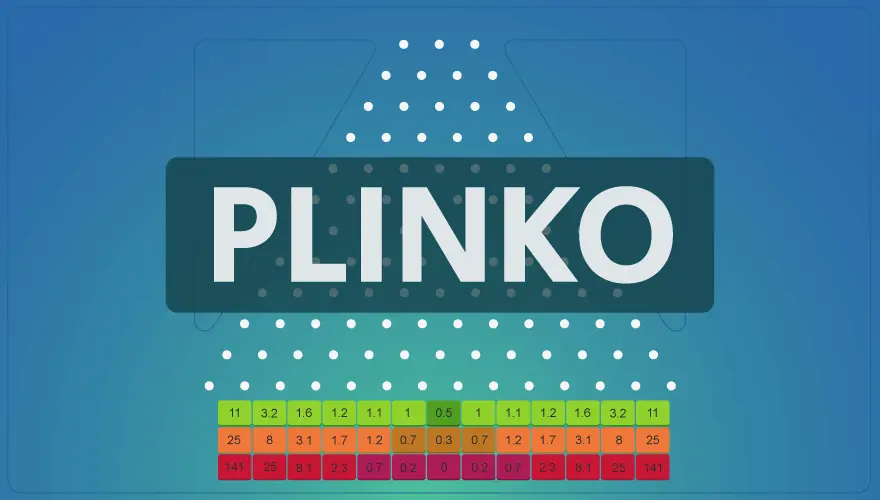
The core layout is simple. A ball starts at the top, moves downward through a pyramid-like field of pegs, and is repeatedly deflected left or right until it reaches one of the multiplier pockets at the bottom. Each pocket corresponds to a different return on the original stake.
In practical terms, the board is built around three elements:
- Rows — more rows usually mean a longer path and a wider possible multiplier range.
- Risk level — this changes how the payout distribution is arranged across the bottom slots.
- Stake size — this determines the real-money value of any result.
The movement itself is presented as a chain of tiny deflections. To the player, it looks like physics. In operational terms, the result is produced through the game’s random logic, then displayed through the bouncing animation. That does not make the animation meaningless, but it does mean players should not confuse visual drama with a skill-based edge.
Most Plinko versions, including the type commonly seen on modern casino platforms, place the lowest multipliers near the center and the highest ones at the edges. This reflects the probability curve. The ball is more likely to drift toward central areas over many rounds, while extreme edge outcomes appear less often. That is why the largest multipliers can look tempting but remain statistically difficult to hit.
| Element | What it changes | Why it matters in a real session |
|---|---|---|
| Rows | Length of the drop and spread of outcomes | More rows often increase suspense and can widen the gap between common and rare results |
| Risk setting | Distribution of multipliers | Higher risk usually means more low-end results and rarer but larger returns |
| Bet amount | Cash value of each landing slot | Fast sessions can magnify losses quickly if the stake is set too high |
What is important here is not just how the board looks, but what the structure implies. A player is not betting on a “good drop” in any intuitive sense. The player is entering a predefined probability framework where the board shape and risk profile determine how often small returns, dead drops, and rare spikes are likely to appear.
Understanding the movement logic, risk levels, and session flow
If I had to explain the logic of Plinko in one sentence, I would say this: the game converts a simple drop into a distribution problem. Everything revolves around how often the ball is likely to land in common zones versus extreme zones.
Low-risk mode generally compresses the payout map. The top multipliers are smaller, but the middle of the board tends to be less punishing. This often results in a steadier session profile with more modest outcomes and fewer violent swings. For some players, that makes the game easier to manage emotionally and financially.
Medium-risk mode usually sits in the middle ground. It still allows for visible upside, but the balance between routine returns and harsher misses is less severe than in high-risk mode. Many players gravitate here because it gives the board enough tension without turning every short run into a stress test.
High-risk mode is where Plinko changes character. The board may look the same, but the experience can feel completely different. The payout distribution becomes more polarized. Small or losing outcomes tend to dominate, while the largest multipliers become the reason to stay in the session. This is where the format can become deceptively expensive. A player sees the same clean interface, the same falling ball, the same quick cycle — but the bankroll exposure is no longer mild.
That is one of the most useful observations I can offer: Plinko does not announce its danger loudly. It often looks calmer than it really is. A flashy slot signals intensity through sound, symbols, and bonus features. Plinko can be much quieter, yet a high-risk setup with rapid drops can burn through a balance faster than many reel-based games.
The general session flow is also unusually brisk. There is little downtime between outcomes. The ball drops, lands, the multiplier is shown, and the next round can begin almost immediately. This compressed rhythm is part of the attraction, but it also reduces the natural pauses that sometimes help players regulate decisions.
Why the tempo feels so different from slots
Speed is one of the defining traits of Blackjack ballroom casino Plinko. In a slot, even a quick spin includes reel animation, symbol evaluation, and sometimes extra transitions. Plinko strips that down to a direct sequence: release, bounce, result. Because of that, the game can feel light and fluid, especially in short sessions.
But quick does not always mean casual. Fast result cycles can intensify emotional involvement. A player can experience ten, twenty, or more outcomes in a very short time, especially if the platform allows repeated drops with minimal interruption. This creates a rhythm that is closer to repeated probability testing than to a traditional slot session built around anticipation for feature triggers.
There is another subtle difference. Slots often build excitement through accumulation: scatters, expanding wilds, multipliers inside bonus rounds, progressive sequences. Plinko builds excitement through repetition and contrast. Most drops may produce ordinary results, which makes a sudden edge landing feel dramatic. The game’s tension comes from imbalance, not from layered features.
That is why some players find Plinko refreshing while others lose interest quickly. If someone enjoys complex bonus structures, symbol combinations, and evolving round states, Plinko may feel too bare. If someone prefers immediate outcomes, visible probability, and a cleaner loop, the format can be far more appealing.
A memorable detail here is that Plinko often creates micro-suspense rather than long-form suspense. Each individual drop lasts only moments, but those moments are packed with directional uncertainty. It is almost the opposite of a slot free spins review round. One is short and sharp; the other is extended and cumulative.
What players should understand about probabilities and expected outcomes
The biggest mistake I see with Plinko is assuming that because the rules are simple, the outcome profile is also simple. It is not. The board may be easy to read, but the probability distribution behind it can be harsh, especially under aggressive settings.
In most versions, central slots are more likely than edge slots. That means small multipliers or near-break-even outcomes tend to appear more often than the eye may intuitively expect after watching a few dramatic drops. The rare headline multiplier exists to shape the upper ceiling of the game, not to serve as a routine result.
Here is the practical takeaway: a few exciting clips or isolated high returns do not describe the average session. Plinko can produce strong spikes, but those spikes usually sit on top of a large base of ordinary or weak outcomes. If a player enters with unrealistic expectations, the format can feel unfair when it is actually behaving exactly as designed.
It also helps to separate three ideas that are often blurred together:
- Chance of hitting something — how often the ball lands in any paying slot.
- Chance of recovering the stake — how often the multiplier meaningfully offsets the cost of play.
- Chance of landing a standout result — how often the board reaches its top-end potential.
These are not the same thing. A session can contain many non-zero returns and still be net negative overall. That is especially true when low multipliers dominate the distribution.
Another point players in New Zealand should keep in mind is that the clean visual design can make the board feel “fairer” than a slot simply because the path is visible. But visibility is not the same as generosity. A transparent-looking process can still be statistically demanding.
How risky is Plinko, and who is likely to enjoy it?
The honest answer is that Plinko can range from relatively manageable to highly aggressive depending on configuration. It is not one fixed experience. The risk profile changes significantly with the selected mode and, in some versions, the number of rows.
For cautious players, low-risk settings can make the format more digestible. The session may still fluctuate, but the board tends to produce fewer extreme swings. This can suit players who want a lighter, more controlled gambling rhythm without learning a complicated ruleset.
For variance-seeking players, high-risk Plinko is often the real attraction. These players accept long stretches of weak returns in exchange for the possibility of a major multiplier. In that sense, Plinko can resemble a compressed high-volatility slot, but without bonus rounds or symbol-based storytelling.
Who is it best for? In my view, Plinko fits players who value:
- very fast rounds;
- simple controls;
- clear visual feedback;
- the ability to adjust session character through risk settings;
- short bursts of play rather than long, feature-driven sessions.
Who may not enjoy it? Players who prefer strategic decision-making, table-game depth, or the layered progression of slots may find it too repetitive. Also, anyone who chases large multipliers without strict bankroll discipline can run into trouble quickly, because the pace encourages repeated attempts. To understand the wagering rules behind each offer, open Blackjack Ballroom Casino no deposit bonus codes next.
One of the clearest truths about Blackjackballroom casino Plinko is this: it suits players who understand that simplicity of interface does not mean softness of outcome. That mindset makes a real difference.
What separates Plinko from classic slots and other casino games
Plinko occupies an unusual space. It is neither a standard slot nor a table game, and that is part of its identity. To understand whether it belongs in your rotation, it helps to compare its practical behavior with other familiar formats.
| Format | Main driver of excitement | Typical player experience |
|---|---|---|
| Plinko | Visible drop path and multiplier distribution | Fast, repetitive, probability-focused, easy to enter |
| Classic slots | Reels, symbols, bonus rounds, feature triggers | More layered, often slower, built around event cycles |
| Roulette | Single-ball result with table betting options | Clear odds structure, stronger betting strategy element |
| Crash-style games | Cash-out timing before the round ends | More decision-based pressure, less passive than Plinko |
The biggest distinction is that Plinko gives the player an illusion of physical journey. A slot spin resolves through symbols. Blackjack Ballroom Casino roulette for New Zealand players resolves through a wheel. Plinko resolves through a path. That path does not create skill, but it does create emotional texture.
Compared with slots, Plinko is usually less thematic and less feature-heavy. Compared with roulette, it offers less betting variety but more visual suspense per round. Compared with crash games, it is more passive because there is no live cash-out decision. In short, it is a pure drop-and-resolve format built around distribution rather than strategy.
Practical strengths and weaker points of the format
Every casino game has trade-offs, and Plinko is no exception. Its strengths are real, but so are its limitations.
The strongest point is accessibility. A new player can understand the core loop almost instantly. That lowers the entry barrier and makes the game useful for short sessions when someone does not want to study rules or paytables for ten minutes before placing a stake.
The second advantage is adjustable session character. Risk settings can materially change how the board behaves. This gives Plinko more flexibility than many players expect. A low-risk session and a high-risk session may feel like two different products wearing the same interface.
The third advantage is pacing. For players who dislike dead time, Plinko is efficient. It gets to the point quickly and keeps the action moving.
Now the weaker side. The format can become repetitive if a player needs narrative progression or feature variety. There is no evolving bonus structure to break the rhythm. After enough drops, some players stop seeing suspense and start seeing repetition.
Another issue is bankroll erosion through speed. Because rounds resolve quickly, losses can accumulate before the player fully registers the session trend. This is especially relevant on higher-risk settings, where many ordinary results can sit between the rare standout landings.
Finally, Plinko can encourage outcome chasing. The top multiplier is always visible, which keeps the ceiling in front of the player’s eyes at all times. That constant visual reminder is part of the format’s appeal, but it can also become a trap if expectations drift away from probability.
What to check before launching Blackjack ballroom casino Plinko
Before starting a session at Blackjack ballroom casino, I would focus on a few practical checks rather than jumping straight into repeated drops.
- Look at the risk setting first. Do not treat low, medium, and high as cosmetic labels. They shape the entire payout profile.
- Check the multiplier spread. A very large maximum multiplier may look attractive, but ask what the lower end of the board looks like.
- Set a session budget before the pace takes over. Plinko is quick enough to bypass reflection if you do not define limits in advance.
- Use demo mode if available. This is one of the few formats where a short test run can immediately reveal whether the rhythm suits you.
- Decide what you want from the session. If you want stability, do not drift into high-risk mode out of curiosity and then keep playing there.
I would also add one less obvious point: pay attention to your own reaction to near-edge bounces. Plinko can create a strong emotional pull when the ball appears close to a top multiplier and then falls back toward the center. That sensation is part of the entertainment, but it can also intensify impulsive repeat betting. Recognizing that early helps keep the session grounded.
In other words, the right way to approach Blackjackballroom casino Plinko is not to ask whether the next drop might be special. It is to decide whether the current setup matches your tolerance for fluctuation and your reason for playing.
Final verdict: what Plinko really gives the player
Blackjack ballroom casino Plinko offers a clean, fast, probability-led gambling experience that is easy to enter and harder to judge correctly than it first appears. Its biggest strength is not complexity but clarity. The board is readable, the action is immediate, and the tension is concentrated into short, visible drops that make randomness feel unusually tangible.
That said, the format deserves more respect than its simple layout suggests. Risk settings can transform the session from relatively steady to sharply uneven. The quick pace can increase spending speed. And the constant presence of high multipliers can tempt players to chase outcomes that are designed to be rare.
I would recommend Plinko to players who like direct action, short rounds, and adjustable intensity without the extra layers of a classic slot. I would be more cautious with it for players who want strategic depth, slower pacing, or a richer feature structure. For them, Plinko may feel too repetitive or too exposed to abrupt swings.
The most accurate way to describe it is this: Plinko is simple to start, but not simplistic in its real behavior. If you approach it with realistic expectations, clear limits, and an understanding of how risk level changes the session, it can be one of the more distinctive formats on a modern casino platform. If you mistake its minimal interface for a low-pressure experience, it can become much more demanding than expected.
FAQ
How does Plinko work during the game?
A ball drops from the top and bounces through pegs into numbered slots at the bottom. The slot where it lands determines the multiplier and the win amount for that round.
What is the fastest way to begin playing Plinko on the official casino site?
Open the Plinko game and choose the mode, then press Start or Drop Ball. Most players can launch immediately after the loading screen completes.
Does Plinko use multipliers, and where can the multiplier be seen?
Yes, Plinko outcomes are based on multipliers attached to the bottom slots. The game interface shows the multipliers and your round result after the ball settles.
What account information is typically needed if real-money play is requested?
A valid account with active session access is required for placing stakes in real-money play. If a login is blocked, signing in again and checking the account status helps restore entry to Plinko.
Why might Plinko load slowly or stop during launch?
A weak connection, an outdated browser, or cached files can delay loading. Closing extra tabs and reloading the game often restores the Plinko lobby view.
Is Plinko treated the same as online slots in terms of limits and session controls?
Plinko has its own game panel, and table or session limits can apply differently from slots. Checking the current limits shown in the Plinko interface is the quickest way to confirm what restrictions are active.
What can be done when login or game access is unavailable in Blackjack Ballroom?
Starting with a fresh login session is the most common fix. If the Plinko lobby still does not open, clearing the browser cache, switching networks, or using a different device can help. Support can assist with account access issues without leaving the official site experience.
How can a player avoid a common beginner mistake with Plinko settings?
The most frequent issue is starting rounds with an unintended stake level or staying in the wrong mode. Confirm the demo versus real-money selection and the current stake before pressing Start or Drop Ball. If the game remembers previous settings, review them every session so the Plinko multipliers reflect the intended risk.